
Quick Answer: Best Roofing Material for New England
The best roofing material for New England (including Boston, MA and Rhode Island) is:
👉 Architectural asphalt shingles for most homeowners
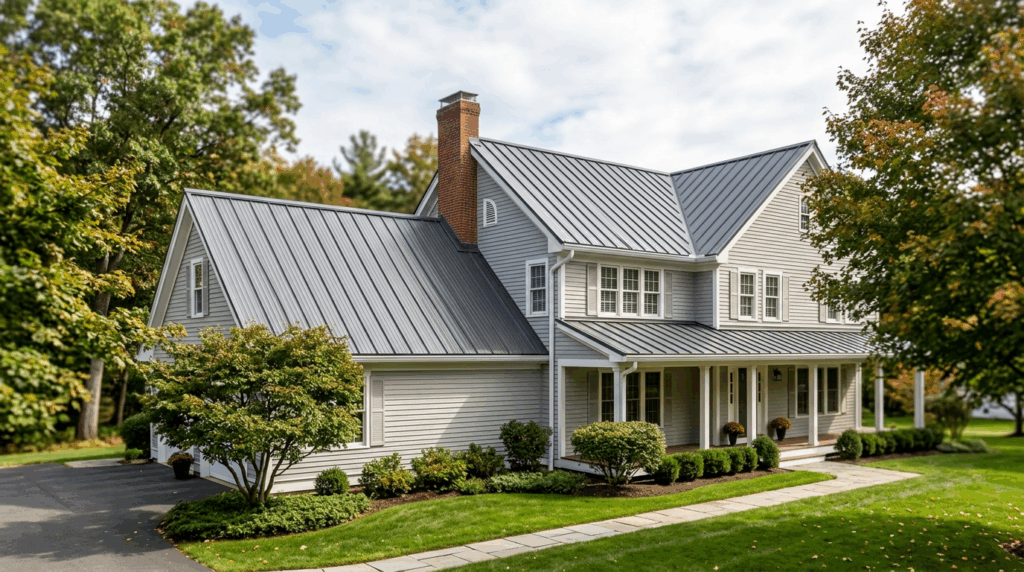
👉 Metal roofing for maximum durability and lifespan
These materials perform best against:
- Snow and ice
- Freeze-thaw cycles
- Strong winds
- Heavy rain
In the triple-deckers of Somerville and the coastal cottages of Narragansett, the “best” roofing material isn’t about the spec sheet — it’s about what survives the 30th freeze-thaw cycle, the harbor wind that lifts edges, and the ice dam that tests every valley flashing. At ID Roof, we’ve learned that architectural shingles and metal aren’t just popular choices. They’re the ones that actually hold up when New England’s seasonal rhythm puts every seam and edge to the test.
ID Roof expert insight:
“In New England, the best roof isn’t the most expensive — it’s the one that handles snow, ice, and moisture consistently over time.”
Why Roofing in New England Is Different
Homes in Massachusetts and Rhode Island face extreme conditions:
- Heavy snow loads in winter
- Ice dams from freeze-thaw cycles
- High winds (especially coastal areas)
- Humidity and rain in warmer months
This means roofing materials must be:
- Durable
- Moisture-resistant
- Wind-resistant
- Properly installed
The reality across older colonial homes in Cambridge and waterfront properties in Newport: a material that works perfectly in a mild climate can struggle here. Coastal humidity accelerates corrosion on metal fasteners; repeated freeze-thaw cycles pull at adhesive bonds in ways a single winter storm never could. At ID Roof, we factor in that hidden variable during material selection — because the best roof for your home isn’t the one that looks good in July. It’s the one that still performs in March.
Top Roofing Materials for New England Homes
+1 (857) 600-2299
1. Architectural Asphalt Shingles (Best Overall)
Why They Work Well:
- Stronger than standard shingles
- Good wind resistance
- Cost-effective
- Reliable in snow and cold
Typical Lifespan:
20–30 years
Best For:
Most residential homes in Boston and Rhode Island
ID Roof expert insight:
“Architectural shingles are the go-to choice for New England homes. They offer the best balance of durability, cost, and performance.”
2. Metal Roofing (Best for Longevity)
Why It Works Well:
- Sheds snow easily
- Extremely durable
- Resistant to wind and moisture
Typical Lifespan:
40–70 years
Best For:
- Long-term homeowners
- Homes in high-snow or coastal areas
Considerations:
- Higher upfront cost
- Requires experienced installation
3. Asphalt 3-Tab Shingles (Budget Option)
Pros:
- Lower cost
- Widely available
Cons:
- Shorter lifespan
- Less wind resistance
- More vulnerable to New England weather
ID Roof expert insight:
“We rarely recommend 3-tab shingles in this region unless budget is the main concern.”
4. Cedar Shake (Limited Use)
Pros:
- Natural appearance
- Good insulation properties
Cons:
- Sensitive to moisture
- Requires maintenance
- Less common in modern installations
Key Factors When Choosing Roofing Material
1. Snow and Ice Performance
Your roof must handle:
- Heavy snow loads
- Ice dam formation
Materials like metal and architectural shingles perform best.
2. Wind Resistance
Coastal Rhode Island homes need:
- High wind-rated materials
- Proper fastening systems
3. Moisture Protection
Rain and humidity require:
- Quality underlayment
- Proper ventilation
- Water-resistant materials
4. Budget vs Long-Term Value
- Asphalt = lower upfront cost
- Metal = higher upfront, lower long-term cost
What Matters More Than Material? Installation
Even the best material will fail if installed incorrectly.
Proper installation includes:
- Ice and water shield
- Ventilation system
- Flashing and sealing
ID Roof expert insight:
“We’ve seen premium roofs fail in 5–10 years due to poor installation. Material matters — but installation matters more.”
Final Answer: What Should You Choose?
For most homes in New England:
- Best overall: Architectural asphalt shingles
- Best long-term investment: Metal roofing
- Best budget option: 3-tab shingles (with limitations)
FAQ: Roofing Materials for New England
What is the most durable roofing material for cold climates?
Metal roofing is the most durable, with a lifespan of up to 70 years.
Are asphalt shingles good for snow and ice?
Yes, especially architectural shingles, which are designed for durability and weather resistance.
Is metal roofing worth it in New England?
Yes, especially for long-term homeowners or homes in high-snow or coastal areas.
What roofing material is best for coastal homes?
Metal roofing or high-quality architectural shingles with strong wind ratings.
Do I need special roofing for ice dams?
Proper installation with ice and water shield is more important than the material itself.
How long does a roof last in New England?
Typically 20–30 years for asphalt and 40–70 years for metal, depending on conditions and installation.
Get Expert Roofing Advice from ID Roof
Choosing the right roofing material is critical — but it depends on your specific home, location, and budget.
At ID Roof, we help homeowners across Boston, MA and Rhode Island select and install roofing systems designed specifically for New England weather.
✅ Expert material recommendations
✅ Professional installation for harsh climates
✅ Long-lasting, reliable roofing systems
Choose What Actually Holds Up — Not Just What Looks Good
If you want a material recommendation that reflects what your New England home actually endures — not just a generic product list — call ID Roof for guidance built on local field experience and seasonal realities.