
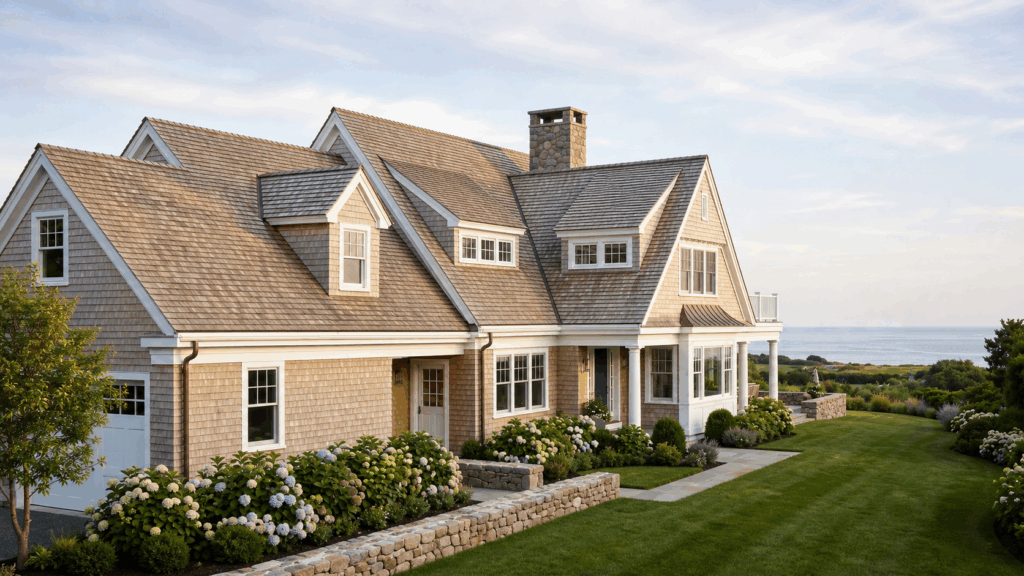
Quick Answer: Are Cedar Shake Roofs Worth It?
Cedar shake roofs can be worth it in Massachusetts, but only for specific homeowners.
They offer:
- Strong natural appearance
- Good insulation performance
- Long lifespan with proper maintenance
However, they also require:
- Regular upkeep
- Higher maintenance costs
- Careful protection from moisture and storms
We get it — the idea of a cedar shake roof feels romantic: natural, timeless, premium. But after managing projects across Providence and Quincy, we’ve learned this: the roof that looks stunning in a brochure can become a maintenance headache in New England’s humidity. At ID Roof, we’d rather have the honest conversation about what cedar actually demands than let you discover the reality after the first nor’easter.
ID Roof expert insight:
“Cedar shake roofs are beautiful, but in New England weather they are a lifestyle choice, not just a roofing choice.”
What Is a Cedar Shake Roof?
Cedar shake roofs are made from natural wood shingles, typically:
- Split cedar wood (not factory-cut like asphalt shingles)
- Installed in overlapping layers
- Designed for natural insulation and aesthetics
They are often used on higher-end or historic homes in New England.
Benefits of Cedar Shake Roofs in Massachusetts
+1 (857) 600-2299
1. Natural and Premium Appearance
Cedar shake roofs offer:
- A classic, high-end look
- Strong curb appeal
- Architectural character
They are often used in luxury or historic neighborhoods.
2. Good Natural Insulation
Wood provides:
- Better insulation than asphalt
- Natural temperature regulation
- Improved energy efficiency in some cases
3. Long Potential Lifespan
With proper maintenance, cedar shake roofs can last:
- 25–40 years or more
However, this depends heavily on care and climate exposure.
4. Strong Performance in Dry Conditions
Cedar performs well when:
- Properly ventilated
- Regularly maintained
- Protected from excess moisture
Drawbacks of Cedar Shake Roofs in MA
1. High Maintenance Requirements
Cedar shake roofs need:
- Regular cleaning
- Mold and algae treatment
- Periodic sealing or treatment
Without maintenance, performance drops quickly.
2. Moisture Sensitivity
In Massachusetts and Rhode Island:
- Rain and humidity are frequent
- Snow and ice exposure is heavy
This increases risk of:
- Rot
- Mold growth
- Material degradation
Honestly, we understand the appeal of cedar. If you’re weighing natural aesthetics against practical upkeep, just know: in Massachusetts, a cedar roof that looks perfect in July can start showing moisture stress by November once harbor humidity and repeated freeze-thaw cycles work into the wood fibers. We’ve walked both paths with homeowners, and we’ll give you a straight answer based on your roof’s actual exposure — not our preference for a “premium” material. The roof doesn’t fail because of one bad storm. It fails because the wood couldn’t handle the 40th humidity cycle nobody planned for.
ID Roof expert insight:
“Moisture is the biggest enemy of cedar roofs in New England — not age.”
3. Higher Cost
Cedar shake roofs are more expensive than asphalt:
- Higher material cost
- Higher installation cost
- Higher maintenance cost
4. Fire and Weather Considerations
Depending on treatment:
- Can be more vulnerable than asphalt or metal
- Requires proper fire-resistant treatments in some cases
5. Not Ideal for Ice Dams
In New England winters:
- Ice dams can cause water intrusion
- Freeze-thaw cycles accelerate wear
- Moisture retention is a concern
Cedar Shake vs Asphalt Shingles
Cedar Shake
- Premium look
- High maintenance
- Sensitive to moisture
Asphalt Shingles
- Lower cost
- Lower maintenance
- Better suited for harsh weather
When Cedar Shake Roofs Are Worth It
Cedar shake is worth it if you:
- Prioritize aesthetics and natural materials
- Are willing to maintain the roof regularly
- Own a higher-end or historic property
- Accept higher long-term costs
When Cedar Shake Roofs Are NOT Ideal
Avoid cedar shake if:
- You want low maintenance
- You live in a high-moisture exposed area
- You prefer maximum durability and simplicity
- You want the lowest lifetime cost
Final Answer: Are Cedar Shake Roofs Worth It in MA?
Yes — but only for the right homeowner.
- Great for aesthetics and premium homes
- Challenging in harsh New England weather
- Requires ongoing maintenance and care
For most homes in Massachusetts, architectural asphalt shingles are more practical, while cedar shake is a premium architectural choice.
FAQ: Cedar Shake Roofs in Massachusetts
How long do cedar shake roofs last in MA?
Typically 25–40 years with proper maintenance.
Are cedar roofs good in cold climates?
They can perform well, but moisture is a major concern.
Do cedar roofs require a lot of maintenance?
Yes, they require regular cleaning and treatment.
Are cedar shake roofs expensive?
Yes, they are more expensive than asphalt shingles.
What is the biggest problem with cedar roofs?
Moisture damage from rain, snow, and humidity.
Get Expert Roofing Advice from ID Roof
Cedar shake roofs can be beautiful, but they require careful planning and maintenance in New England’s climate.
At ID Roof, we help homeowners in Boston, MA and Rhode Island choose the right roofing system based on durability, budget, and long-term performance.
✅ Honest material comparison
✅ Residential roof inspections
✅ Roofing solutions for New England weather
Choose Beauty — But Know What It Actually Demands
If you want a recommendation that reflects what your Massachusetts home actually endures — not just a romantic product image — call ID Roof for guidance built on local field experience and seasonal realities.