
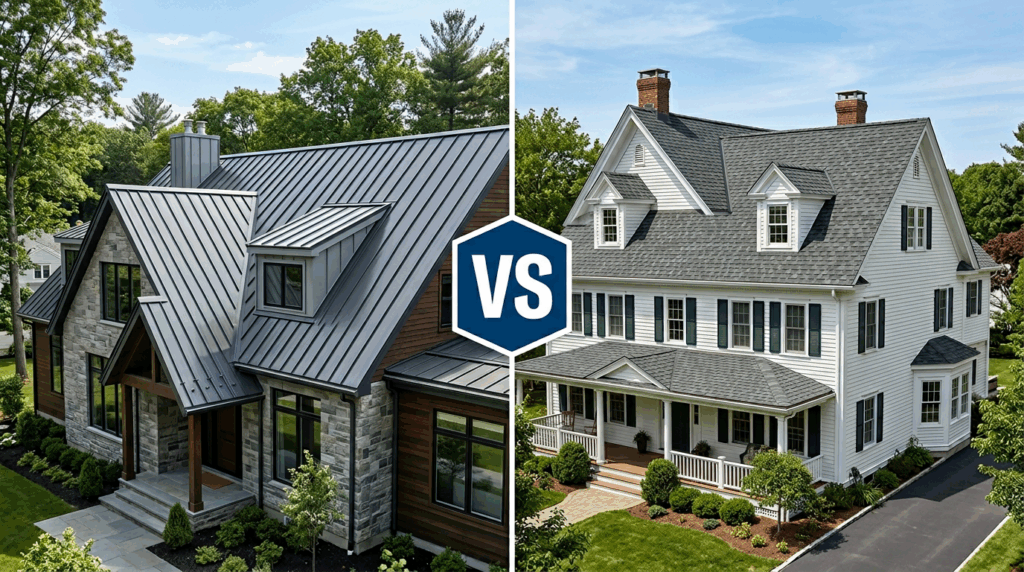
Quick Answer: Which Is Better?
In Massachusetts and Rhode Island:
- Asphalt shingles = best for affordability and proven residential use
- Composite roofing = best for durability, lifespan, and performance
The better option depends on whether you prioritize lower upfront cost or long-term value.
In the triple-deckers of Providence and the colonial homes of Brookline, the “better” roofing material isn’t about the spec sheet — it’s about what survives the 30th freeze-thaw cycle, the harbor wind that lifts edges, and the ice dam that tests every valley flashing. At ID Roof, we’ve learned that composite and asphalt aren’t just price tiers. They’re choices that reflect what your home actually endures when New England’s seasonal rhythm puts every seam and layer to the test.
ID Roof expert insight:
“Asphalt is the standard. Composite is the upgrade. The right choice depends on how long you plan to stay in the home.”
What Is Asphalt Roofing?
Asphalt shingles are the most common roofing material in New England.
Key features:
- Fiberglass base with asphalt coating
- Granule surface protection
- Standard residential roofing system
Lifespan:
- 20–30 years (architectural shingles)
- 15–20 years (3-tab shingles)
What Is Composite Roofing?
Composite roofing is made from:
- Synthetic polymers
- Rubber-like materials
- Engineered blends designed to mimic slate or wood
It is a modern alternative to traditional roofing materials.
Lifespan:
- 30–50+ years depending on product quality
+1 (857) 600-2299
Cost Comparison
Asphalt Shingles
- Lower upfront cost
- Average installation: budget-friendly
- Best for standard residential projects
Composite Roofing
- Higher upfront cost
- Premium material pricing
- More expensive installation
ID Roof expert insight:
“Composite roofing costs more initially, but it often reduces lifetime replacement cycles.”
Durability in Massachusetts Weather
Asphalt Roofing
- Good performance in most conditions
- Vulnerable to ice dams and wind over time
- Faster aging in freeze-thaw cycles
Composite Roofing
- Highly resistant to:
- Snow load
- Wind uplift
- Moisture damage
- Temperature changes
The reality across older colonial homes in Cambridge and coastal cottages in Narragansett: an asphalt roof that looks fine in July can start showing wear by November once harbor humidity and repeated freeze-thaw cycles work into the granules. At ID Roof, we factor in that hidden variable during material selection — because the best roof for your home isn’t the one that looks good on a brochure. It’s the one that still performs in March.
Lifespan Comparison
- Asphalt shingles: 20–30 years
- Composite roofing: 30–50+ years
Composite roofs typically last significantly longer in New England conditions.
Maintenance Requirements
Asphalt Roofing
- Periodic repairs
- Shingle replacement after storms
- More frequent inspections
Composite Roofing
- Lower maintenance overall
- Fewer repairs over time
- Better long-term stability
Weather Performance in New England
Snow and Ice
- Asphalt: moderate resistance
- Composite: strong resistance
Freeze-Thaw Cycles
- Asphalt: more vulnerable to cracking
- Composite: more stable and flexible
Wind and Storms
- Asphalt: shingles may lift or tear
- Composite: better wind resistance
ID Roof expert insight:
“Composite roofing performs closer to premium systems like metal or slate, but with less structural weight.”
Appearance and Home Value
Asphalt Shingles
- Traditional look
- Widely accepted in residential neighborhoods
Composite Roofing
- Premium appearance (often mimics slate or wood)
- Higher curb appeal and resale value
Pros and Cons Summary
Asphalt Roofing – Pros
- Lower cost
- Easy installation
- Widely available
Asphalt Roofing – Cons
- Shorter lifespan
- More storm damage over time
Composite Roofing – Pros
- Longer lifespan
- High durability
- Premium appearance
Composite Roofing – Cons
- Higher upfront cost
- More expensive installation
When Asphalt Is the Better Choice
Choose asphalt if you want:
- Lower upfront investment
- Standard residential solution
- Easy repair and replacement
- Short-to-mid-term home ownership
When Composite Roofing Is the Better Choice
Choose composite if you want:
- Long-term durability
- Fewer replacements over time
- Better storm resistance
- Premium appearance and value
Final Answer: Composite vs Asphalt
- Asphalt roofing = best for cost and practicality
- Composite roofing = best for durability and long-term value
In New England, composite roofing is growing in popularity, but asphalt remains the most common choice.
FAQ: Composite vs Asphalt Roofing
Is composite roofing worth it?
Yes, if you plan to stay long-term and want durability.
How long does composite roofing last?
Typically 30–50+ years.
Is asphalt roofing still a good choice?
Yes, it remains the most cost-effective option.
Which roof handles storms better?
Composite roofing generally performs better in harsh weather.
Is composite roofing more expensive?
Yes, it has a higher upfront cost than asphalt.
Get Expert Roofing Advice from ID Roof
Choosing between asphalt and composite roofing depends on budget, long-term goals, and New England weather exposure.
At ID Roof, we help homeowners in Boston, MA and Rhode Island choose the most cost-effective and durable roofing system for their property.
✅ Professional roof evaluations
✅ Material comparison and recommendations
✅ High-quality residential roofing solutions
Choose What Actually Holds Up in Your Neighborhood — Not Just What Looks Good on Paper
If you want a material recommendation that reflects what your Massachusetts home actually endures — not just a generic product comparison — call ID Roof for guidance built on local field experience and seasonal realities.