
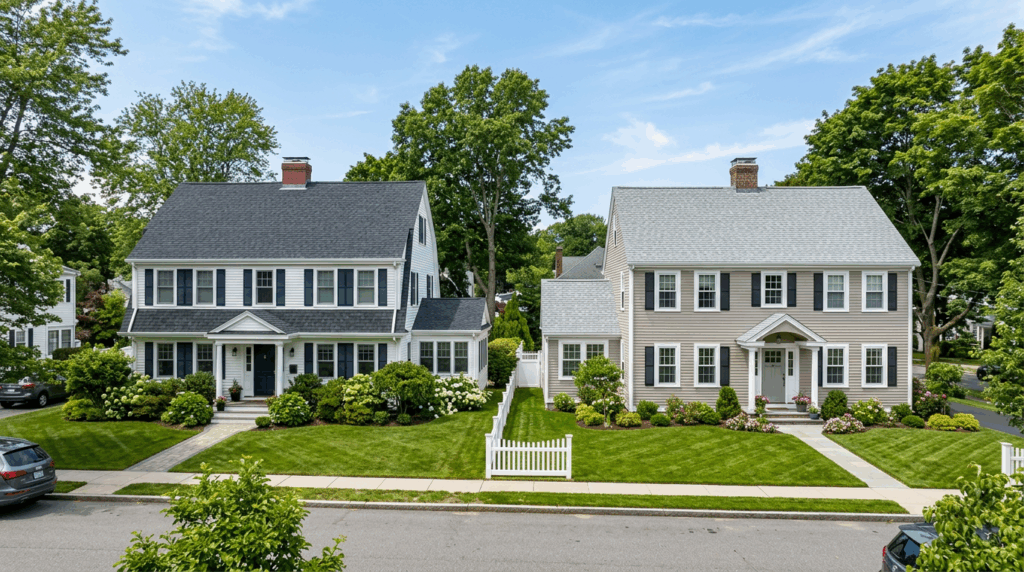
Quick Answer: Does Shingle Color Matter?
Yes — shingle color affects:
- Roof temperature
- Energy efficiency
- Snow melting behavior
- Visual appearance of your home
In Boston, MA and Rhode Island, both dark and light shingles can work well, but each has different advantages depending on your priorities.
We get it — choosing between dark and light shingles can feel like picking between “traditional charm” and “modern efficiency.” But after managing projects across Providence and Quincy, we’ve learned this: the color that makes sense isn’t about the trend. It’s about what your home actually endures: harbor humidity in summer, freeze-thaw cycles in winter, nor’easter winds that test every edge. At ID Roof, we’d rather have the honest conversation about your priorities than push a “perfect” color that doesn’t fit your reality.
ID Roof expert insight:
“Shingle color won’t make or break your roof, but it can influence comfort, energy use, and how your home performs seasonally.”
1. Dark Shingles: Pros and Cons
Advantages of Dark Shingles
Dark shingles absorb more heat, which can be beneficial in colder months:
- Helps snow melt faster in winter
- Can slightly reduce heating demand
- Hides dirt, stains, and aging better
- Popular for traditional and modern home styles
Disadvantages of Dark Shingles
- Higher heat absorption in summer
- Can increase attic temperatures
- May slightly raise cooling costs
Honestly, we understand the appeal of dark shingles — they look classic, hide wear, and help with snow melt. But in Massachusetts, that same heat absorption that helps in January can work against you in August. If your attic ventilation isn’t optimized, a dark roof can trap warmth that raises your AC bill. We’ve walked both paths with homeowners, and we’ll give you a straight answer based on your roof’s actual exposure — not our preference for a “timeless” look. The roof doesn’t fail because of one bad season. It fails because the system couldn’t handle the 40th temperature swing nobody planned for.
ID Roof expert insight:
“In New England, dark shingles can help with snow melt, but proper ventilation is essential to avoid summer overheating.”
2. Light Shingles: Pros and Cons
Advantages of Light Shingles
Light shingles reflect more sunlight:
- Lower roof surface temperature in summer
- Reduced attic heat buildup
- Potential energy savings on cooling
- Better performance during hot spells
Disadvantages of Light Shingles
- Snow may melt more slowly in winter
- Dirt and discoloration may show more easily
- Less traditional aesthetic for some homes
ID Roof expert insight:
“Light shingles are often preferred for energy efficiency, especially on homes with strong sun exposure and poor ventilation.”
+1 (857) 600-2299
3. Impact on Energy Efficiency in Boston
Boston has both hot summers and cold winters, so the impact is seasonal:
- Summer: light shingles perform better
- Winter: dark shingles can help with snow melting
However, the biggest factor is still:
- Attic insulation
- Roof ventilation
Color alone has a limited effect compared to the full roofing system.
4. Durability: Does Color Affect Roof Lifespan?
The color itself does not significantly change durability, but heat can play a role:
- Dark shingles may experience slightly more heat stress in summer
- Light shingles may age more evenly in hot conditions
In both cases, quality of materials matters more than color.
5. Aesthetic and Home Value Considerations
Dark Shingles
- Strong contrast with siding
- Traditional New England appearance
- Often used in classic or colonial-style homes
Light Shingles
- Brighter, modern appearance
- Blends well with light-colored exteriors
- Can make homes appear larger or cleaner
6. What Works Best in Massachusetts & Rhode Island?
There is no universal best choice, but general trends are:
- Dark shingles are more common in traditional neighborhoods
- Light shingles are often chosen for energy-conscious upgrades
ID Roof expert insight:
“Most homeowners in New England choose shingles based on style first, then fine-tune performance through insulation and ventilation.”
Final Answer: Dark vs Light Shingles
- Dark shingles: better for snow melt, traditional look, slightly warmer roof
- Light shingles: better for summer heat reflection and energy efficiency
- Best choice overall: depends on your home style, insulation, and comfort priorities
FAQ: Dark vs Light Shingles
Do dark shingles make a house hotter?
Yes, they absorb more heat, especially in summer.
Are light shingles better for energy efficiency?
Yes, they reflect more sunlight and reduce heat buildup.
Do shingles color affect roof lifespan?
Only slightly — material quality and installation matter more.
Which color is better for snow?
Dark shingles help snow melt faster.
What do most homes in Massachusetts use?
Dark and medium-toned shingles are most common.
Get Expert Roofing Advice from ID Roof
Choosing the right shingle color is part of designing a roof that performs well in New England’s changing seasons.
At ID Roof, we help homeowners in Boston, MA and Rhode Island choose roofing systems that balance efficiency, durability, and aesthetics.
✅ Professional roofing consultations
✅ Material and color selection guidance
✅ High-quality residential roof installation
Choose Color for Your Home — Not Just for the Catalog
If you want a recommendation that reflects what your Massachusetts home actually endures — not just a generic color chart — call ID Roof for guidance built on local field experience and seasonal realities.