
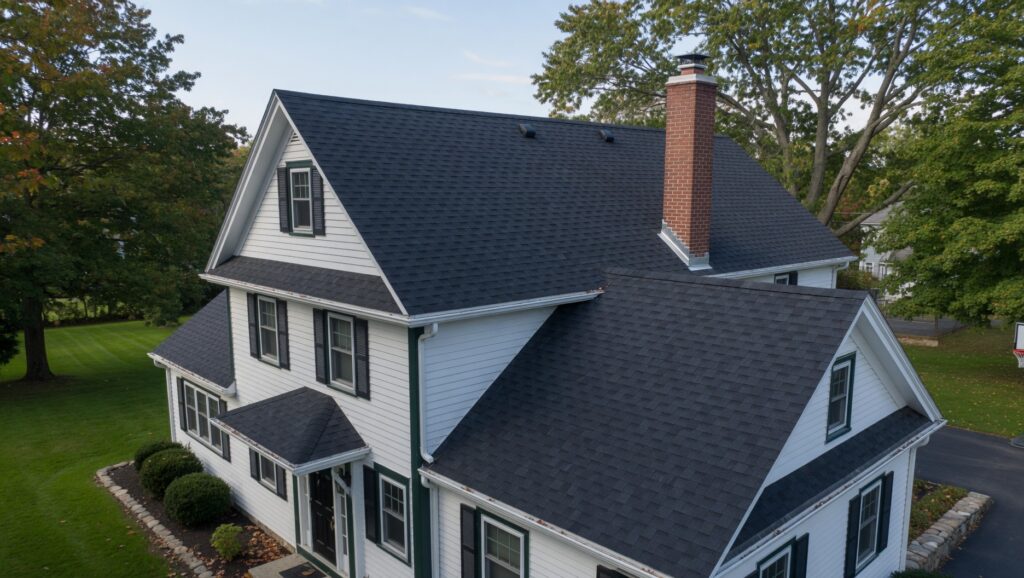
Quick Answer: Why Roofing Costs Increase
Most roofing projects in Massachusetts and Rhode Island cost more than the initial estimate because of:
- Hidden structural issues
- Code-required upgrades
- Material and labor changes
- Incomplete or low-quality quotes
When we scope a roofing project in Dorchester or Newport, we don’t start by quoting shingles. We start by asking: what’s under the old roof? In New England, the most expensive line item isn’t the material — it’s what we find after tear-off: wet decking from coastal humidity, ventilation that never kept up with modern code, flashing that was “good enough” in 1995. At ID Roof, we map the full system before we price it, because the real cost isn’t on the spec sheet. It’s in what the roof has already endured.
ID Roof expert insight:
“The biggest problem isn’t that costs increase — it’s that many estimates don’t include everything from the start.”
1. Roof Decking Repairs (Most Common Hidden Cost)
Once the old roof is removed, contractors often discover:
- Rotten wood
- Water-damaged decking
- Structural weakness
Why it matters:
New roofing cannot be installed over damaged decking.
Typical impact:
- Additional $1,000–$3,000+ depending on damage
ID Roof expert insight:
“You can’t see decking problems until the roof is opened — that’s the most common surprise cost.”
2. Ice and Water Shield Requirements
In New England, building codes often require:
- Ice and water barrier installation
- Protection along eaves and valleys
Hidden issue:
Some low-cost estimates exclude this or under-spec it.
Impact:
- Adds cost but prevents major winter leaks
+1 (857) 600-2299
3. Ventilation Upgrades
Many older homes have poor attic ventilation.
What may be needed:
- Ridge vents
- Soffit vents
- Airflow improvements
Why it matters:
Without proper ventilation:
- Roof lifespan decreases
- Ice dams become more likely
During on-site evaluations, we often find that the “ventilation” homeowners assume is present is actually blocked by insulation no one noticed in July. We start by tracing airflow paths at soffit vents and measuring ridge flow before we ever quote an upgrade. At ID Roof, we’ve learned that the decision to add vents isn’t about the visible gap. It’s about what the attic has already revealed and what New England’s next thaw will demand.
4. Flashing Replacement
Flashing protects vulnerable areas like:
- Chimneys
- Skylights
- Roof valleys
Hidden issue:
Some contractors reuse old flashing to lower price.
Risk:
- Leaks shortly after installation
ID Roof expert insight:
“Reusing old flashing is one of the fastest ways to get a leak on a ‘new’ roof.”
5. Tear-Off and Disposal Costs
Removing old roofing includes:
- Labor for tear-off
- Dumpster rental
- Disposal fees
Hidden issue:
Low quotes may not fully include disposal costs.
6. Structural Repairs
In some cases, roofs require:
- Reinforcement
- Framing repairs
- Slope correction
These are rare but can significantly increase costs.
7. Permit and Inspection Fees
In Massachusetts:
- Permits are usually required
- Inspection fees may apply
Hidden issue:
Not all estimates clearly include permit costs.
8. Roof Complexity and Accessibility
Costs increase with:
- Steep roof pitch
- Multiple roof sections
- Limited access to the property
These factors are sometimes underestimated in initial quotes.
9. Material Upgrades During the Project
Homeowners sometimes choose to upgrade:
- Better shingles
- Improved underlayment
- Enhanced ventilation
Impact:
Higher final cost, but often better long-term value.
10. Emergency Repairs During Installation
During installation, crews may find:
- Hidden leaks
- Mold or moisture damage
- Improper previous installations
These issues must be addressed immediately.
Why Low Roofing Quotes Can Be Misleading
Some contractors:
- Exclude critical components
- Use lower-quality materials
- Skip necessary upgrades
ID Roof expert insight:
“If a quote looks too good to be true, it usually means something important is missing.”
How to Avoid Hidden Roofing Costs
1. Get a Detailed Written Estimate
Make sure it includes:
- Materials
- Labor
- Permits
- Cleanup
2. Ask About What’s NOT Included
Clarify:
- Decking repairs
- Ventilation upgrades
- Flashing replacement
3. Choose Experienced Contractors
Experienced roofers:
- Anticipate problems
- Provide realistic pricing
- Reduce surprises
Important Note on Pricing
All roofing costs are approximate.
Final pricing depends on:
- Roof condition
- Structure and design
- Material selection
A precise estimate requires a professional inspection.
Final Answer: Hidden Roofing Costs
The most common hidden costs in roofing projects are:
- Decking repairs
- Ventilation upgrades
- Flashing replacement
- Ice and water protection
- Disposal and permit fees
Understanding these factors helps avoid budget surprises and ensures a properly installed roof.
FAQ: Hidden Roofing Costs
What is the most common hidden roofing cost?
Roof decking repairs discovered after tear-off.
Can I avoid hidden costs completely?
Not entirely, but detailed estimates reduce surprises.
Why are cheap roofing quotes risky?
They often exclude important components or upgrades.
Do all roofs need ventilation upgrades?
Not always, but many older homes do.
Should flashing always be replaced?
Yes, replacing flashing is recommended for long-term performance.
Get Transparent Roofing Estimates from ID Roof
Hidden costs can turn a simple roofing project into a stressful experience — unless you work with the right contractor.
At ID Roof, we provide clear, detailed estimates for homeowners in Boston, MA and Rhode Island — with no surprises.
✅ Transparent pricing
✅ Full system approach (not just shingles)
✅ Honest recommendations
See the Full Picture — Before You Sign
If you want an estimate that traces what your roof has actually endured — not just a generic line-item list — call ID Roof for a scope-based breakdown built on local field experience.