
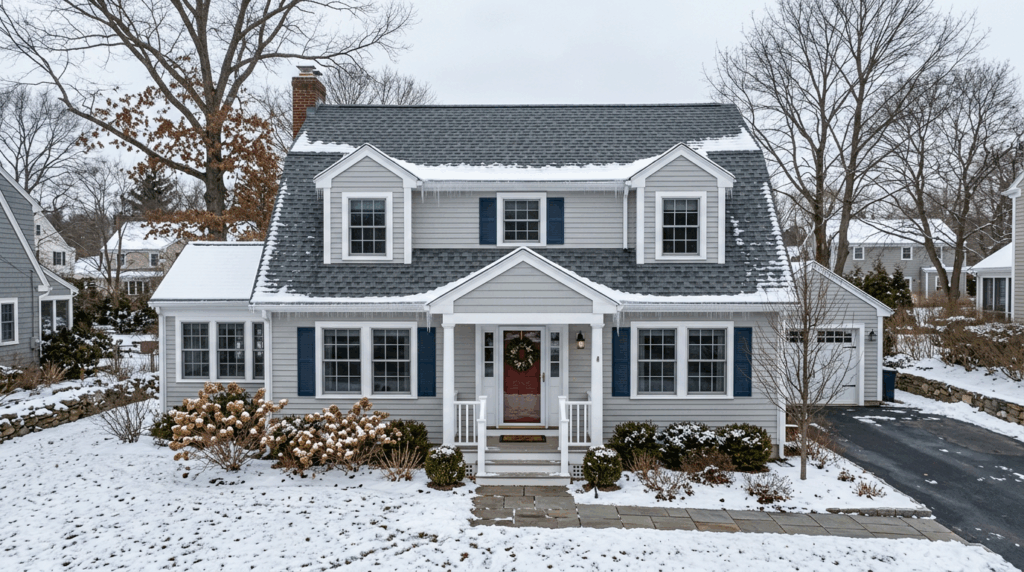
Quick Answer: What Are Freeze-Thaw Cycles?
Freeze-thaw cycles happen when temperatures repeatedly go:
- Above freezing (snow melts)
- Below freezing (water refreezes)
This constant expansion and contraction slowly destroys roofing materials over time.
In Boston, MA and Rhode Island, this is one of the biggest hidden causes of roof failure.
When we assess a roof in Brookline or Warwick after a January thaw, we don’t start by looking at visible cracks. We start in the attic — tracing moisture paths at knee walls, testing deck firmness near valleys, and measuring airflow at soffit vents. The crack on the shingle is rarely the problem. It’s the symptom. At ID Roof, we map the freeze-thaw stress pattern before we ever discuss repairs, because in New England, chipping ice without fixing the ventilation is just treating the echo, not the source.
ID Roof expert insight:
“Freeze-thaw damage is slow and invisible at first — but over time it breaks even strong roofing systems apart.”
How Freeze-Thaw Cycles Damage Roofs
1. Water Expands When It Freezes
When water enters small cracks in shingles or flashing:
- It freezes and expands
- The crack becomes larger
- More water enters next cycle
Over time, small gaps turn into major leaks.
+1 (857) 600-2299
2. Shingle Cracking and Deterioration
Asphalt shingles are affected by temperature swings:
- Heat softens materials
- Cold makes them brittle
- Repeated cycles cause cracking
This slowly weakens the protective surface layer.
On older colonial homes in Cambridge and coastal cottages in Narragansett, we’ve seen the same seasonal rhythm: a roof that passes a December check can still develop micro-cracks by March when repeated temperature swings pull at adhesive bonds. At ID Roof, we start spring assessments by tracing ice melt lines instead of waiting for interior stains. The asphalt always tells you where it’s hurting first—you just have to look before the thaw washes the evidence away.
3. Flashing and Seal Failure
Metal flashing and seals expand and contract differently from shingles.
This leads to:
- Separation at joints
- Gaps around chimneys and vents
- Water intrusion points
ID Roof expert insight:
“Most leaks we see in older New England homes come from flashing failures caused by freeze-thaw stress.”
4. Ice Formation Under Shingles
When meltwater refreezes:
- Ice builds under roofing layers
- Shingles lift slightly
- Water gets trapped inside the system
This is especially dangerous in winter storms.
5. Roof Decking and Structural Damage
Over time, repeated moisture cycles cause:
- Wood rot in decking
- Weakened structural supports
- Sagging roof sections
This often requires full roof replacement.
6. Gutter and Edge Damage
Freeze-thaw cycles also affect roof drainage systems:
- Ice blockages in gutters
- Overflow and water backup
- Damage at roof edges
Why New England Is Especially Affected
Massachusetts and Rhode Island experience ideal conditions for freeze-thaw damage:
- Frequent winter temperature swings
- Coastal moisture exposure
- Heavy snow followed by warming periods
- Long winter seasons
Signs Your Roof Is Affected
Look for:
- Cracked or curling shingles
- Leaks after snow or rain
- Ice buildup near roof edges
- Water stains inside the home
- Loose flashing around roof penetrations
How to Prevent Freeze-Thaw Roof Damage
1. Proper Attic Insulation
Prevents uneven roof heating and melting.
2. Roof Ventilation System
Keeps temperature stable and reduces moisture buildup.
3. Ice and Water Shield Installation
Protects vulnerable roof areas from water penetration.
4. Regular Roof Inspections
Helps detect early-stage damage before it spreads.
ID Roof expert insight:
“The best defense against freeze-thaw damage is temperature control — not just stronger materials.”
Can Freeze-Thaw Damage Require Roof Replacement?
Yes, especially if:
- Damage is widespread
- Leaks have reached the interior
- Roof is already near end of lifespan
- Decking or structure is affected
Early-stage damage can often be repaired.
Final Answer: How Freeze-Thaw Cycles Destroy Roofs
Freeze-thaw cycles damage roofs by:
- Expanding cracks with freezing water
- Weakening shingles and flashing
- Creating hidden leaks
- Causing structural deterioration over time
In New England, this is a slow but major factor in roof aging.
FAQ: Freeze-Thaw Roof Damage
What is freeze-thaw damage on a roof?
It is damage caused by water freezing and expanding inside roofing materials.
Why is it common in Massachusetts?
Because of frequent temperature swings around freezing.
Can freeze-thaw cycles cause leaks?
Yes, they often lead to hidden water intrusion.
How can I prevent freeze-thaw damage?
Proper insulation, ventilation, and roof protection systems.
Is this damage visible immediately?
No, it usually develops gradually over several seasons.
Protect Your Roof from Freeze-Thaw Damage with ID Roof
Freeze-thaw cycles are one of the most destructive long-term threats to roofs in New England.
At ID Roof, we help homeowners in Boston, MA and Rhode Island identify early damage and prevent costly structural failures.
✅ Full roof inspections
✅ Moisture and leak detection
✅ Long-term roofing protection solutions
Fix the Source — Not Just the Crack
If you want a solution based on what your attic is actually doing — not just what you see on the shingle — call ID Roof for an assessment that traces freeze-thaw stress patterns before recommending repairs.