
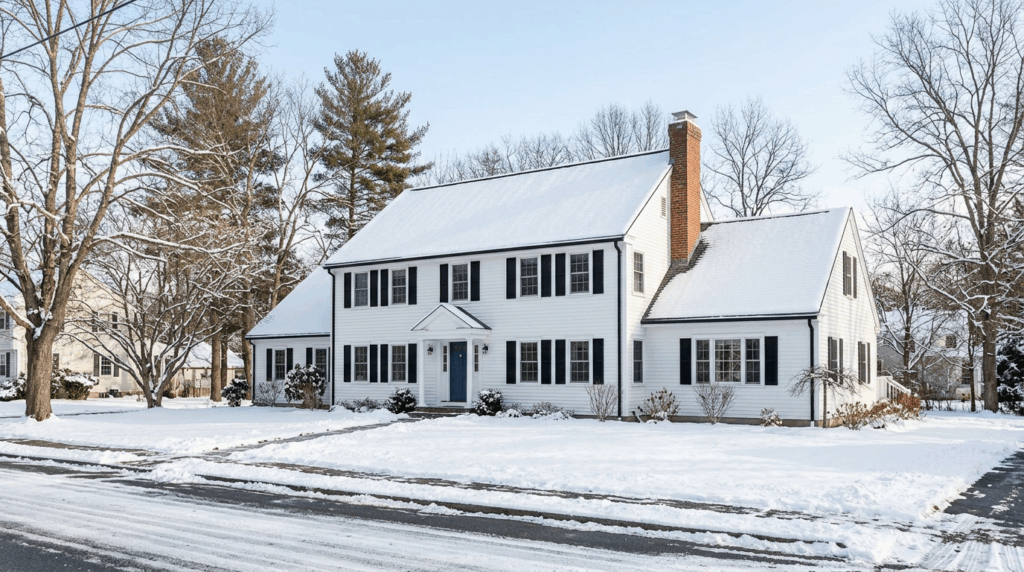
Quick Answer: How Snow and Ice Affect Asphalt Roofs
Snow and ice damage asphalt roofs by:
- Adding heavy weight to the structure
- Creating ice dams that force water under shingles
- Causing freeze-thaw expansion that cracks materials
- Blocking proper drainage
In Massachusetts and Rhode Island, this is one of the main reasons asphalt roofs fail earlier than expected.
After tracking roof call-backs through three consecutive Boston winters, our crews at ID Roof learned to read the “quiet” signs: the asphalt shingle that looks intact in November but lifts at the seal line by February, the valley where ice dams have slowly pushed underlayment loose, the granules in the gutter that aren’t just wear—they’re a warning. We now factor those micro-observations into every post-winter check, because in New England, the damage you see on the surface is rarely the damage that started the leak. It’s what the freeze-thaw cycles quietly worked into over months.
ID Roof expert insight:
“Asphalt shingles don’t usually fail from one storm — they fail from repeated snow and ice cycles over time.”
1. Excess Weight From Snow Load
Heavy snowfall can put significant pressure on your roof.
What happens:
- Roof structure becomes stressed
- Weak points begin to sag
- Older roofs are especially vulnerable
Wet snow is particularly heavy and dangerous.
2. Ice Dams Force Water Under Shingles
Ice dams form when snow melts and refreezes at roof edges.
Damage caused:
- Water backs up under shingles
- Underlayment gets saturated
- Interior leaks appear
This is one of the most destructive winter roofing problems in New England.
ID Roof expert insight:
“Most winter roof leaks we see in Boston are caused by ice dams, not shingle failure.”
+1 (857) 600-2299
3. Freeze–Thaw Cycles Break Down Shingles
Massachusetts winters often swing above and below freezing.
What happens:
- Shingles expand when warm
- Contract when frozen
- Over time, cracks form
This slowly weakens the protective surface layer.
On older colonial homes in Cambridge and coastal cottages in Narragansett, we’ve seen the same seasonal rhythm: a roof that passes a December check can still develop micro-cracks by March when repeated temperature swings pull at adhesive bonds. At ID Roof, we start spring assessments by tracing ice melt lines instead of waiting for interior stains. The asphalt always tells you where it’s hurting first—you just have to look before the thaw washes the evidence away.
4. Granule Loss from Ice and Moisture
Asphalt shingles are protected by mineral granules.
Snow and ice contribute to:
- Granule erosion
- UV protection loss
- Faster aging of shingles
You may notice granules in gutters after winter.
5. Moisture Penetration and Rot
If water gets under shingles:
- Roof decking absorbs moisture
- Wood begins to rot
- Mold can develop in attic spaces
This is often invisible until major damage appears.
6. Wind + Ice Combination Damage
New England storms often combine:
- Snow
- Ice
- High winds
This leads to:
- Lifted shingles
- Broken edges
- Exposed underlayment
Why Asphalt Roofs Are Vulnerable in New England
Asphalt shingles perform well, but:
- They rely on proper installation
- They need good ventilation
- They are sensitive to long-term moisture exposure
Harsh winters accelerate wear significantly.
Signs Your Asphalt Roof Has Snow/Ice Damage
Look for:
- Missing or curling shingles
- Ice dams or large icicles
- Water stains inside the home
- Granules in gutters
- Soft or sagging roof areas
How to Reduce Snow and Ice Damage
1. Proper Attic Insulation
Prevents uneven roof heating.
2. Roof Ventilation System
Keeps roof temperature stable.
3. Ice and Water Shield
Protects vulnerable roof edges.
4. Regular Snow Removal
Reduces weight and ice dam risk.
5. Annual Roof Inspection
Detects early damage before it spreads.
ID Roof expert insight:
“Most expensive roof repairs could have been avoided with proper ventilation and early inspection.”
Can Snow Damage Require Roof Replacement?
Yes — if:
- Shingles are widely damaged
- Water has reached decking
- Mold or rot is present
- Roof is near end of lifespan
Minor damage can often be repaired, but widespread winter damage usually leads to replacement.
Final Answer: How Snow and Ice Damage Asphalt Roofs
Snow and ice damage asphalt roofs through:
- Structural stress from weight
- Ice dam formation and leaks
- Freeze-thaw cracking
- Moisture penetration
- Granule loss and aging
In New England, these effects accumulate over time and shorten roof lifespan significantly.
FAQ: Snow and Ice Roof Damage
Can snow damage an asphalt roof?
Yes, especially when combined with ice and heavy accumulation.
What is the biggest winter threat to roofs?
Ice dams and freeze-thaw cycles.
How do I know if snow damaged my roof?
Look for leaks, missing shingles, and attic moisture.
Should I remove snow from my roof?
Yes, but only safely or with professional help.
Can winter damage be repaired?
Yes, depending on severity — some cases require full replacement.
Protect Your Roof This Winter with ID Roof
Snow and ice are unavoidable in Massachusetts and Rhode Island — but roof damage doesn’t have to be.
At ID Roof, we help homeowners prevent and repair winter roof damage with expert inspections and long-term solutions built for New England weather.
✅ Winter roof damage inspections
✅ Leak detection and repair
✅ Full replacement when needed
Catch Winter Wear Before the Next Thaw
If you want a post-winter check that tracks real asphalt wear patterns — not just surface checks — call ID Roof for a seasonal assessment built on New England field experience.