
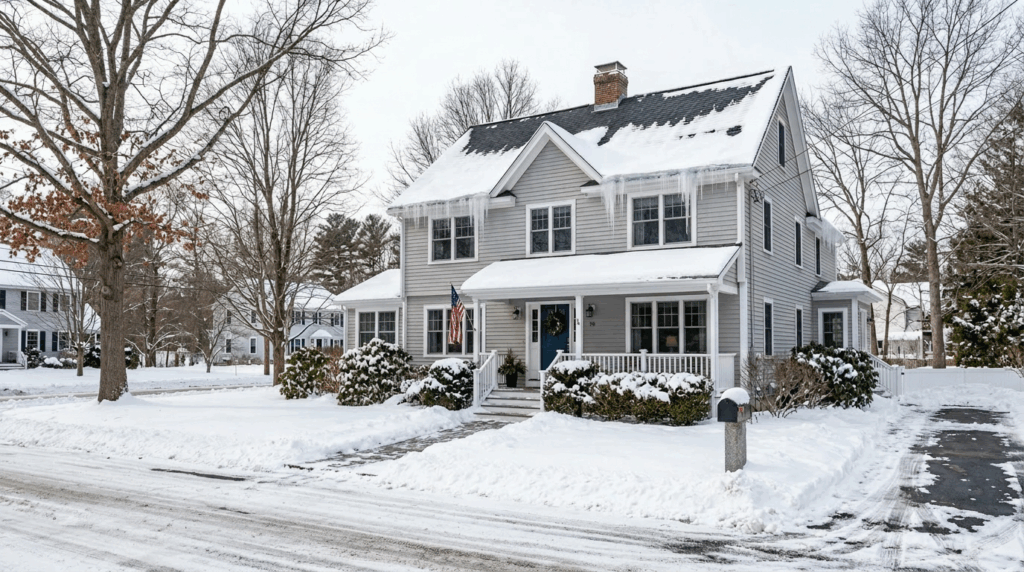
Quick Answer: What Are Ice Dams?
Ice dams are ridges of ice that form at the edge of a roof, preventing melted snow from draining properly.
In Massachusetts winters, they are one of the most common causes of roof leaks and interior water damage.
When we assess a roof in Brookline or Warwick after a January thaw, we don’t start by looking at the icicles. We start in the attic — tracing heat paths at recessed lights, testing insulation density near knee walls, and measuring airflow at soffit vents. The ice dam on the gutter is rarely the problem. It’s the symptom. At ID Roof, we map the heat loss pattern before we ever discuss removal, because in New England, chipping ice without fixing the attic is just treating the echo, not the source.
ID Roof expert insight:
“Ice dams don’t start as a roofing problem — they start as an insulation and ventilation problem inside the home.”
How Ice Dams Form
Ice dams develop through a simple process:
- Heat escapes from the attic
- Snow on the roof melts
- Water flows down toward the colder roof edge
- It freezes again near gutters
- Ice builds up and blocks drainage
This trapped water eventually seeps under shingles.
Main Causes of Ice Dams in Massachusetts
1. Poor Attic Insulation
Heat loss from the home warms the roof unevenly.
2. Poor Ventilation
Without proper airflow, warm air stays trapped in the attic.
3. Uneven Roof Temperatures
Warm upper roof + frozen edges = ideal ice dam conditions.
4. Heavy Snow Accumulation
New England storms create thick snow layers that melt and refreeze.
5. Clogged Gutters
Blocked gutters prevent melting water from draining properly.
ID Roof expert insight:
“Most homeowners think gutters cause ice dams, but the real issue usually starts in the attic.”
+1 (857) 600-2299
Signs You Have Ice Dams
Look for:
- Large icicles along roof edges
- Water stains on ceilings or walls
- Leaks after snowstorms
- Ice buildup in gutters
- Damp insulation in attic
Even small signs can indicate hidden roof damage.
Damage Ice Dams Can Cause
Ice dams are not just a winter inconvenience. They can lead to:
- Roof leaks
- Damaged insulation
- Mold growth
- Rotting roof decking
- Interior drywall damage
In Boston homes, this damage can escalate quickly during winter cycles.
How to Prevent Ice Dams
1. Improve Attic Insulation
Keeps warm air inside the home, not the roof.
2. Upgrade Roof Ventilation
Balanced airflow keeps roof temperature consistent.
3. Seal Air Leaks
Prevent warm air from escaping into the attic.
4. Keep Gutters Clean
Ensures proper drainage of melting snow.
5. Install Ice and Water Shield
A waterproof barrier under shingles for extra protection.
ID Roof expert insight:
“In New England, ice and water shield is not optional — it’s essential for roof durability.”
During on-site evaluations, we often find that the “ice dam problem” homeowners report is actually the third or fourth symptom — not the first. We start by testing insulation coverage at top plates and tracing bypasses around chimneys before we ever quote a solution. At ID Roof, we’ve learned that the decision to add ice and water shield isn’t about the visible ice. It’s about what the attic has already revealed and what New England’s next thaw will demand.
Can Roof Replacement Help Prevent Ice Dams?
Yes — but only if combined with proper insulation and ventilation.
A new roof alone will NOT solve ice dam problems if the attic system is not fixed.
Emergency Solutions for Ice Dams
If ice dams already formed:
- Remove snow safely from roof edge (professional service recommended)
- Use roof-safe steaming or melting methods
- Stop indoor heat loss temporarily if possible
- Inspect for leaks immediately
⚠️ Avoid chipping ice — it can damage shingles.
Why Ice Dams Are So Common in Massachusetts
Massachusetts has ideal conditions for ice dams:
- Long, cold winters
- Frequent snowstorms
- Temperature fluctuations above/below freezing
- Older housing stock with weak insulation
Final Answer: How to Deal With Ice Dams
Ice dams are caused by heat loss + snow + freezing conditions.
To prevent them, homeowners should focus on:
- Attic insulation
- Ventilation
- Air sealing
- Roof protection systems
Ignoring ice dams leads to expensive roof and interior repairs.
FAQ: Ice Dams in Massachusetts
Are ice dams dangerous for my roof?
Yes. They can cause leaks, rot, and structural damage.
Can ice dams be prevented completely?
They can be greatly reduced, but in harsh winters some risk always remains.
Do ice dams mean I need a new roof?
Not always — often the issue is insulation or ventilation, not the roof itself.
How do I know if I have ice dam damage?
Look for leaks, ceiling stains, and icicles along roof edges.
What is the best long-term solution?
A combination of proper insulation, ventilation, and ice & water shield.
Protect Your Roof from Ice Dams with ID Roof
Ice dams are one of the most expensive winter roofing problems in Massachusetts — but they are preventable.
At ID Roof, we help homeowners across Boston, MA and Rhode Island identify and eliminate the root causes of ice dams.
✅ Roof inspections for winter damage
✅ Insulation and ventilation assessment
✅ Long-term roofing protection solutions
Fix the Source — Not Just the Ice
If you want a solution based on what your attic is actually doing — not just what you see on the gutter — call ID Roof for an assessment that traces heat loss patterns before recommending ice dam prevention.