
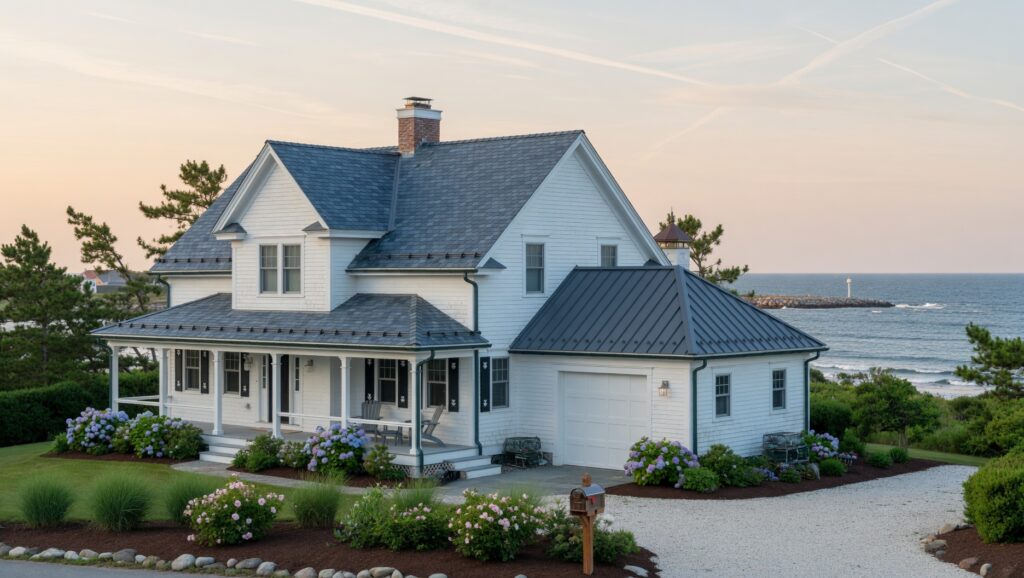
Quick Answer: Why Coastal Rhode Island Roofing Is Different
Roofing in coastal Rhode Island requires special attention because of:
- Strong coastal winds
- Salt air corrosion
- High humidity
- Storm exposure (nor’easters and hurricanes)
Standard roofing systems often wear out faster if not designed for these conditions.
In the raised beach cottages of Narragansett and the waterfront colonials of Newport, coastal roofing isn’t just about picking a durable material — it’s about engineering for constant salt spray, harbor wind gusts, and nor’easter surges that test every fastener. At ID Roof, we’ve learned that standard inland systems rarely survive past their warranty line here. The right roof for your coastal home is the one that accounts for what the Atlantic actually throws at it.
ID Roof expert insight:
“Coastal Rhode Island is one of the most demanding roofing environments in New England — wind and salt accelerate every weakness.”
1. Wind Exposure and Uplift Risk
Main challenge:
Coastal winds can exceed inland wind speeds significantly.
Common issues:
- Shingle uplift
- Edge damage
- Flashing separation
Solution:
- High wind-rated shingles
- Proper nailing patterns
- Reinforced edge systems
2. Salt Air Corrosion
Why it matters:
Salt particles in the air can slowly degrade roofing components.
Affected areas:
- Metal flashing
- Fasteners (nails, screws)
- Roof accessories
Solution:
- Corrosion-resistant materials
- Aluminum or coated metals
- High-quality fasteners
+1 (857) 600-2299
3. Heavy Storm and Nor’easter Damage
Coastal Rhode Island frequently experiences:
- Nor’easters
- Heavy rain events
- Hurricane remnants
Roof risks:
- Water infiltration
- Wind-driven rain leaks
- Structural stress
The reality for properties along Block Island Sound and Narragansett Bay: wind-driven rain in a November nor’easter doesn’t just hit the roof — it forces moisture past shingles that looked perfectly sealed in July. At ID Roof, we mark wind-exposed edges and fastener patterns during assessments not just to replace what’s missing, but to watch how the next storm cycle tests what’s left. The coastal environment doesn’t wait for maintenance. It accelerates wear.
ID Roof expert insight:
“Storm-driven rain is more dangerous than regular rainfall — it forces water into weak points.”
4. High Humidity and Moisture Issues
Effects:
- Mold growth in attic spaces
- Rotting decking
- Reduced insulation performance
Solution:
- Proper attic ventilation
- Moisture barriers
- Regular inspections
5. Best Roofing Materials for Coastal Rhode Island
Architectural asphalt shingles
- Cost-effective
- Must be high wind-rated
Metal roofing
- Excellent wind resistance
- Long lifespan in coastal conditions
Synthetic/composite roofing
- Resistant to moisture and salt
- Low maintenance
6. Installation Quality Is Critical
Even premium materials fail if:
- Nails are incorrectly placed
- Flashing is poorly sealed
- Ventilation is insufficient
ID Roof expert insight:
“In coastal areas, installation quality matters just as much as material choice — sometimes even more.”
7. Maintenance Requirements in Coastal Areas
Homeowners should:
- Inspect roofs twice a year
- Check after major storms
- Clean gutters regularly
- Watch for flashing corrosion
8. Common Roofing Problems in Coastal Rhode Island
- Premature shingle wear
- Wind damage after storms
- Leaks around flashing
- Rusted fasteners
- Moss and algae growth
Final Answer: Coastal Roofing in Rhode Island
Roofing in coastal Rhode Island requires:
- Wind-resistant materials
- Corrosion protection
- Strong installation practices
- Regular maintenance
Without these, roof lifespan can be significantly reduced.
FAQ: Coastal Rhode Island Roofing
Why do roofs fail faster near the coast?
Because of wind, salt air, and moisture exposure.
What is the best roofing material for coastal areas?
Metal and high-quality architectural shingles.
Does salt air damage roofs?
Yes, especially metal components.
How often should coastal roofs be inspected?
At least twice per year.
Are storms the biggest risk?
Yes, especially nor’easters and hurricanes.
Get Coastal-Ready Roofing with ID Roof
At ID Roof, we specialize in roofing systems built for coastal Rhode Island conditions — engineered for wind, salt, and storm resistance.
✅ Coastal weather expertise
✅ Wind-rated roofing systems
✅ Long-term durability focus
Engineer for the Coast — Not Just the Inland Catalog
If you want a system that reflects what your coastal Rhode Island home actually faces — not just a generic durability chart — call ID Roof for guidance built on local field experience and seasonal realities.