
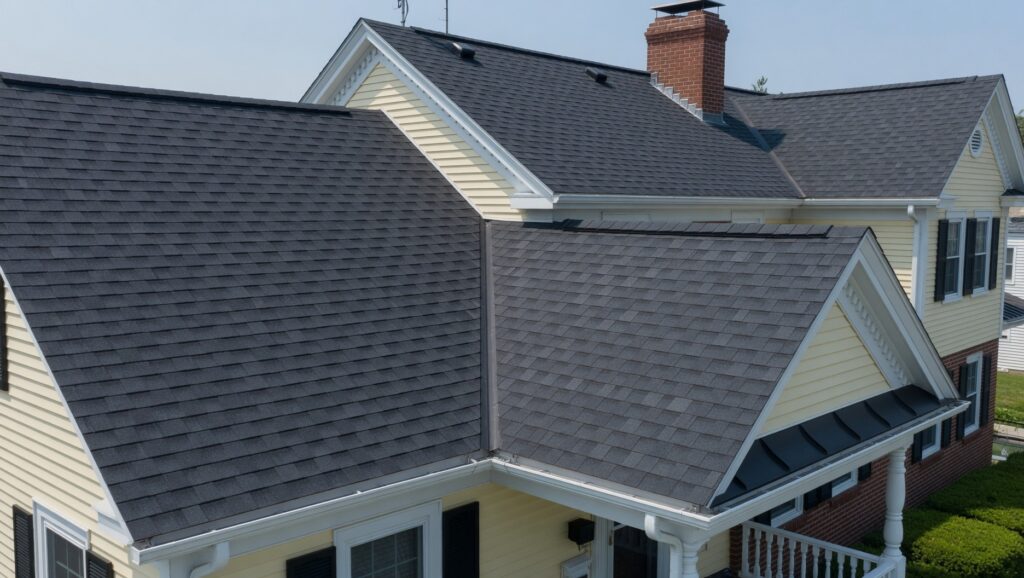
Quick Answer: How to Tell If Your Roof Was Installed Poorly
Common signs of poor roof installation in Massachusetts and Rhode Island include:
- Leaks shortly after installation
- Missing or misaligned shingles
- Sagging or uneven roof lines
- Improper flashing around chimneys or vents
- Poor attic ventilation
When we assess a roof in Brookline or Warwick for installation quality, we don’t start by looking at visible shingles. We start in the attic — tracing moisture paths at knee walls, testing deck firmness near valleys, and measuring airflow at soffit vents. A leak on the ceiling rarely points to the actual failure location; water travels. At ID Roof, we map the real problem before we ever discuss fixes, because in New England, the obvious symptom is often just the echo of a deeper issue.
ID Roof expert insight:
“Most installation problems don’t show immediately — they appear after the first strong storm or winter cycle.”
1. Leaks After a New Roof Installation
What it means:
A new roof should not leak. If it does, it often indicates:
- Improper sealing
- Missing underlayment
- Faulty flashing
Fix:
- Full inspection to identify weak points
- Localized repairs or partial rework
2. Poor Shingle Alignment
Signs:
- Uneven rows
- Visible gaps
- Misaligned edges
Risk:
- Wind uplift
- Water intrusion
Fix:
- Replacement of affected sections
+1 (857) 600-2299
3. Incorrect or Missing Flashing
Flashing protects critical areas like:
- Chimneys
- Skylights
- Roof valleys
Problem:
Improper flashing is one of the leading causes of leaks.
During on-site evaluations, we often find that the “small leak” homeowners report is actually the third or fourth failure point — not the first. We start by testing deck firmness in valleys and around chimneys, then trace ventilation paths before we ever quote a repair. At ID Roof, we’ve learned that the decision to repair isn’t about the visible damage. It’s about what the roof has already endured and what New England’s next season will demand.
4. Poor Ventilation Design
Signs:
- Excess heat in attic
- Ice dams in winter
- Moisture buildup
Fix:
- Add ridge vents or soffit vents
- Rebalance airflow system
ID Roof expert insight:
“Ventilation mistakes shorten roof life more than almost any other installation error.”
5. Uneven or Sagging Roof Areas
Cause:
- Structural issues
- Improper decking installation
Fix:
- Structural evaluation
- Deck reinforcement or rebuild
6. Fast or Rushed Installation
Warning signs:
- Project finished unusually fast
- Lack of attention to detail
Risk:
Shortcuts often lead to early roof failure.
How to Fix Poor Installation
Step 1: Professional Inspection
Identify all installation defects.
Step 2: Document Issues
Photos and written report for warranty or contractor claims.
Step 3: Targeted Repairs or Full Replacement
Depends on severity of issues.
Final Answer: Signs of Poor Installation
Key warning signs include:
- Leaks
- Misaligned shingles
- Faulty flashing
- Ventilation issues
- Structural unevenness
Early detection prevents costly long-term damage.
FAQ: Poor Roof Installation
How soon do installation problems appear?
Often within months after first storms or winter.
Can poor installation be fixed without replacing the roof?
Sometimes, if damage is localized.
What is the most common mistake?
Improper flashing installation.
Is ventilation part of installation quality?
Yes, it is critical.
Should I inspect a new roof?
Yes, especially after the first heavy weather.
Get Expert Roof Inspection from ID Roof
If you suspect installation issues, early action is key.
At ID Roof, we help homeowners in Boston, MA and Rhode Island identify and fix roofing problems before they become major damage.
Fix the Source — Not Just the Symptom
If you want an assessment that traces what your roof has actually endured — not just what you see from the driveway — call ID Roof for an inspection that maps failure patterns before recommending next steps.