
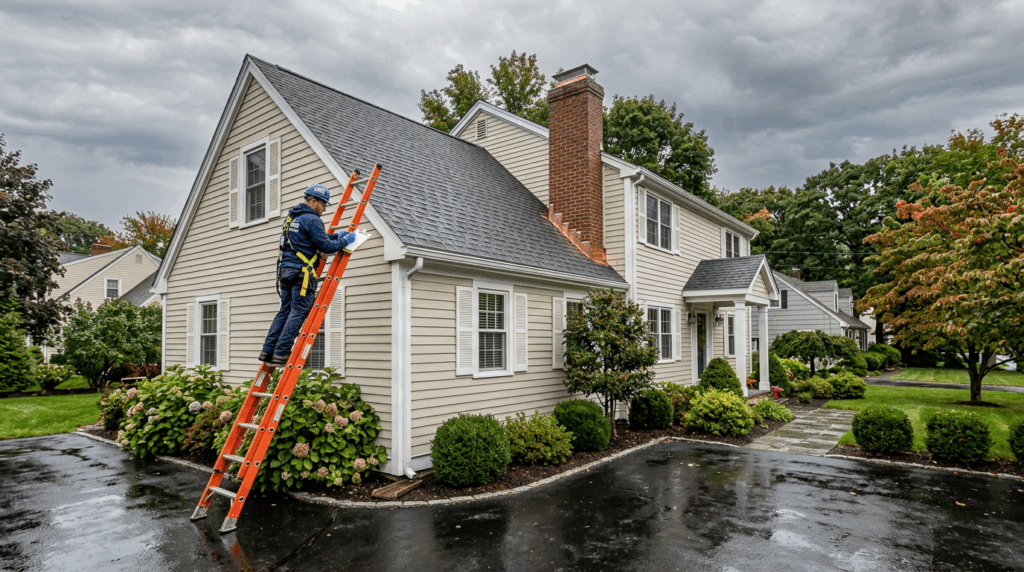
Quick Answer: Signs of Roof Damage After a Storm
After a storm in Boston, MA or Rhode Island, the most common signs of roof damage include:
- Missing or lifted shingles
- Water leaks or ceiling stains
- Damaged flashing or vents
- Granules in gutters
- Debris impact damage
Some damage is obvious — but many serious issues are hidden and require inspection.
After tracking storm callbacks through three consecutive nor’easter seasons across Boston and Newport, our crews at ID Roof learned to listen for the “quiet” signals: the shingle that looks fine from the street but lifts at the edge when the harbor wind hits, the valley flashing that held through summer but separates after the first freeze-thaw cycle, the granules in the gutter that aren’t just wear — they’re a warning. We now start every post-storm check by tracing wind paths and moisture lines, because in New England, the damage you see is rarely the damage that matters.
ID Roof expert insight:
“Storm damage isn’t always visible from the ground. What looks minor can quickly turn into a major leak if not addressed.”
Visible Signs of Roof Damage
1. Missing or Damaged Shingles
Strong winds can:
- Tear off shingles
- Lift edges (making them vulnerable to leaks)
- Crack or loosen materials
Even a few missing shingles can expose your roof to water intrusion.
2. Debris on the Roof
After storms, check for:
- Tree branches
- Leaves and debris buildup
- Impact marks from falling objects
These can damage shingles and underlying layers.
3. Damaged Flashing and Roof Components
Inspect areas around:
- Chimneys
- Skylights
- Roof vents
Bent or loosened flashing is a common source of leaks after storms.
ID Roof expert insight:
“Flashing is one of the first things to fail during a storm, especially in older Boston homes.”
Hidden Signs of Storm Damage
4. Water Stains on Ceilings or Walls
Brown spots or discoloration inside your home indicate:
- Active or recent leaks
- Water entering through the roof
5. Granules in Gutters
Asphalt shingles lose protective granules during storms.
If you notice:
- Black sand-like particles in gutters
your shingles may be deteriorating faster.
6. Moisture or Mold in the Attic
Check your attic for:
- Damp insulation
- Mold growth
- Musty odors
These are signs that water is getting through your roofing system.
+1 (857) 600-2299
New England-Specific Storm Risks
In Massachusetts and Rhode Island, storms can cause unique types of roof damage:
- High winds (nor’easters): shingle loss and lifting
- Heavy rain: water intrusion through weak points
- Hail (occasional): dents and surface damage
- Falling branches: structural damage
Coastal areas in Rhode Island are especially vulnerable to wind-related issues.
On older colonial homes in Cambridge and coastal cottages in Narragansett, we’ve seen the same seasonal pattern: a storm in October might lift a few shingles, but it’s the November nor’easter that turns that small gap into a ceiling stain by December. At ID Roof, we mark wind-exposed edges during post-storm checks not just to replace what’s missing — but to watch how the next weather event tests what’s left.
What to Do After a Storm
Step 1: Visual Check from the Ground
Look for:
- Missing shingles
- Debris
- Visible damage
Step 2: Check Inside Your Home
Inspect ceilings, walls, and attic for leaks or moisture.
Step 3: Schedule a Professional Inspection
Even if damage seems minor, a professional can detect hidden issues.
ID Roof expert insight:
“The biggest mistake homeowners make is waiting. Small storm damage can turn into major repairs within weeks.”
Can Storm Damage Lead to Bigger Problems?
Yes — untreated storm damage can cause:
- Roof leaks
- Structural rot
- Mold growth
- Insulation damage
Delaying repairs often increases the total cost significantly.
Does Insurance Cover Storm Damage?
In most cases, homeowners insurance in MA and RI covers:
- Wind damage
- Storm-related leaks
- Falling debris
It usually does not cover:
- Old or worn-out roofs
- Pre-existing damage
ID Roof expert insight:
“We help homeowners document storm damage properly. A detailed inspection increases the chances of claim approval.”
Final Answer: What Should You Look For?
After a storm, check for:
- Missing or damaged shingles
- Interior water stains
- Debris or impact damage
- Granules in gutters
- Signs of moisture in the attic
If you notice any of these — or even if you’re unsure — a professional inspection is the safest next step.
FAQ: Roof Damage After a Storm
How do I know if my roof has storm damage?
Look for missing shingles, leaks, debris, and granules in gutters. A professional inspection confirms hidden damage.
Can roof damage be invisible after a storm?
Yes. Many issues, like moisture or structural damage, are not visible from the ground.
Should I call a roofer after every storm?
After major storms or high winds, it’s recommended — especially in New England.
How quickly should I fix storm damage?
As soon as possible. Delays can lead to leaks and more expensive repairs.
Will insurance pay for storm damage?
Often yes, if the damage is sudden and caused by a covered event like wind or debris.
Is it safe to inspect my roof myself?
It’s safer to inspect from the ground. Climbing on the roof after a storm can be dangerous.
Schedule a Storm Damage Inspection with ID Roof
If your home was hit by a storm, don’t wait for visible leaks to appear.
At ID Roof, we provide fast and thorough roof inspections across Boston, MA and Rhode Island, helping homeowners identify damage early and avoid costly repairs.
✅ Storm damage inspections
✅ Insurance claim assistance
✅ Fast, reliable repairs
Catch Storm Damage Before the Next Weather Test
If you want to know what a storm actually did to your roof — not just what you see from the driveway — call ID Roof for a post-storm check built on real New England field experience.